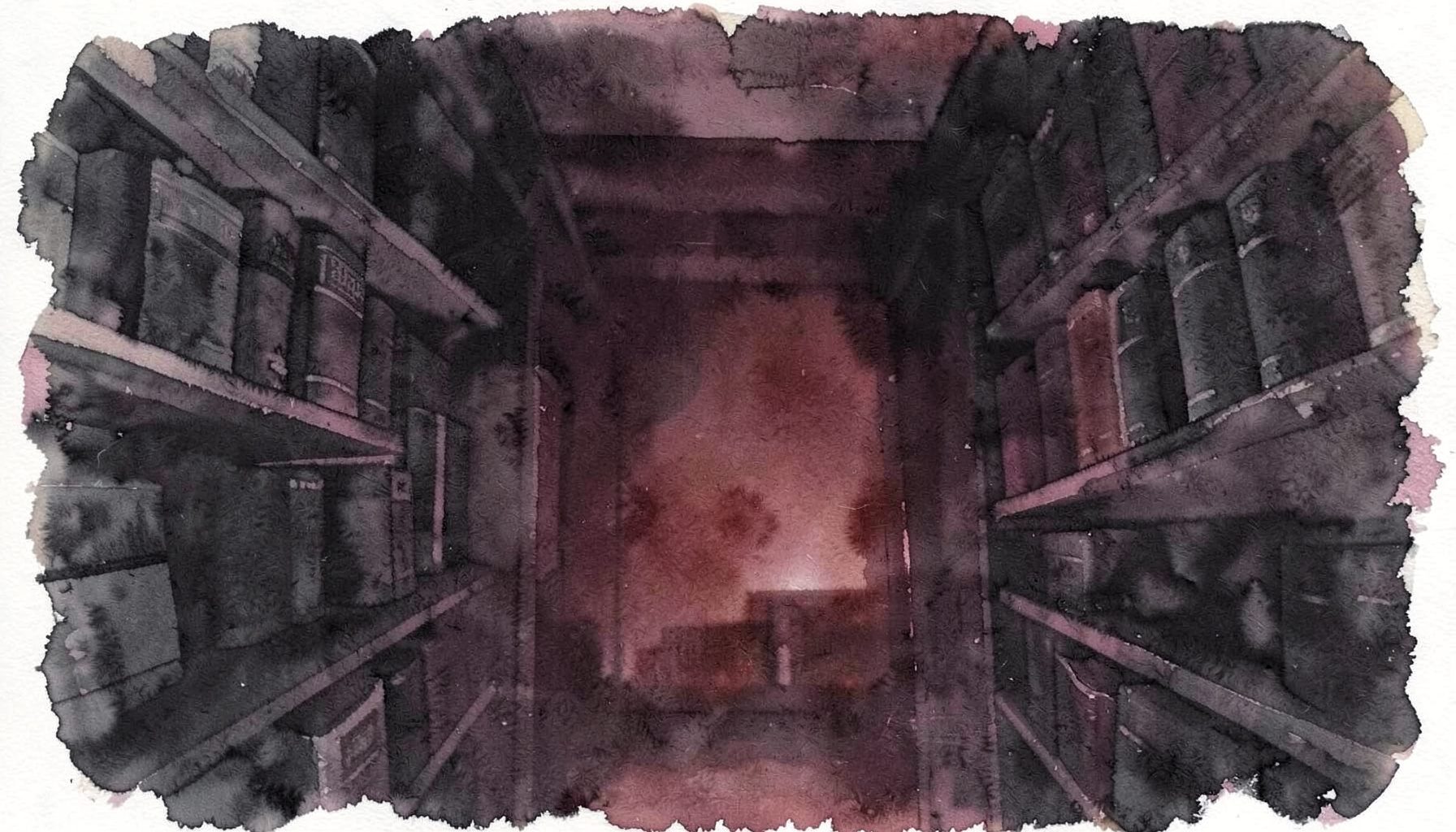
Radical Inquiry
Brains, brawn, and guts.
"Intelligent and radical inquiry into living as a pervy homosexual today. We tend toward dissent, provocation, revolt, and secession from mainstream fag life."
The history of human intimacy is not a straight line but a tangled, beautiful mess of longing, rebellion, and quiet devotion. Across centuries, what passed between two people in the dark was policed by church, state, and neighbour alike. Yet desire has always found its way through the cracks. The very notion that love could be a form of dissent is not new; it is ancient. To trace the shifting perception of same-sex desire is to trace the history of courage itself, a lineage of refusal that runs beneath the official story like a secret river.
There is something almost absurd about the seriousness with which the world treats the act of two bodies coming together. Procreation, fornication, the gift of touch — these have been freighted with so much meaning that the simple fact of pleasure gets buried under centuries of theological and legal rubble. Yet strip away the edicts and what remains is profoundly natural. The urge toward another person, the feeling of skin on skin, predates every institution that claims to govern it.
Marriage has undergone a radical transformation in living memory, shifting from a contract of property and lineage to something far more touchy-feely: a union of souls. The traditional version, blessed by the King James translation and enforced by custom, was never as stable as its defenders imagined. Now that the doors have opened wider, the institution itself is being remade by those who were once shut out. What emerges is not a dilution but a deepening, a truer reflection of human commitment in all its variety.
Faith and hope are not the exclusive property of the orthodox. There is a kind of spiritual practice that happens far from any altar, in the ordinary devotion of two people building a life together. The church may withhold its blessing, but the sacred persists in the mundane: in shared meals, in sickroom vigils, in the thousand small acts of care that constitute a marriage. This is not a rejection of the divine but a reclaiming of it, a stern refusal to let anyone monopolise grace.
The twentieth century gave us Freud, and with him a new vocabulary for understanding the self. Suddenly the sexual urge was not merely a moral problem but a psychological one, a force to be interpreted rather than simply condemned. This shift opened up space for inquiry, for the radical idea that desire might be legible rather than shameful. Yet psychoanalysis also brought new forms of control, new categories to police. Liberation is never complete; it must be won again and again, in each generation.
What does it mean to live as a homosexual today, when mainstream culture has absorbed so much of what was once fringe? Assimilation brings comfort but also a certain emptying out. The edge dulls. The energy that once fuelled art and revolt gets channelled into wedding registries and mortgage applications. There is nothing wrong with happiness, but there is something worth preserving in the old spirit of dissent, the refusal to be respectable on someone else's terms.
Jean Cocteau understood that the artist and the lover are engaged in the same work: the creation of beauty from the raw material of longing. His films, his drawings, his restless movement between forms all testify to a sensibility that refused to compartmentalise. The romantic and the sexual were not separate spheres but a single field of energy. To read his biographers is to encounter a life lived in pursuit of that energy, right up to the final breath.
The book remains a faithful companion to those who seek understanding beyond the noise of the present moment. Whether it is a French novel newly translated by Charlotte Mandell and published by Yale University Press, or a manifesto scribbled in the margins of a forgotten era, reading offers something that scrolling cannot: sustained attention. In the quiet transaction between reader and writer, ideas take root. A single volume can alter the course of a life, can make the absurd existence we share feel suddenly legible.
There is a bleakness peculiar to our evolutionary moment, a sense that we have outgrown the very conditions that shaped us. Wings once useful for flight become superfluous; so too perhaps with certain forms of desire, if we judge them only by the narrow logic of reproduction. But human sexuality has never been merely functional. Continence and procreation tell only part of the story. The rest is art, is play, is the sheer gratuitous beauty of connection for its own sake.
To build an archive is to insist that a life matters. The ephemera of love — a photograph, a note, a book inscribed on the flyleaf — these are the fragments that outlast the body. Against the ugly, ugly emptiness that threatens to swallow everything, the archivist assembles a bulwark of evidence: we were here, we felt this, we touched each other. This is not mere nostalgia. It is a radical act of preservation, a refusal to let the world pretend that certain kinds of love never happened.
Dissent & Provocation
Inspired by the aesthetics, politics, and ideas of the Castro and the Village in the mid-1970s. A lineage from Whitman, Warhol, Mapplethorpe, and beyond.
A Digital Bathroom Stall
For sex, graffiti, and intelligence. A visual memoir of our small festive revolt.
Browse the Archive